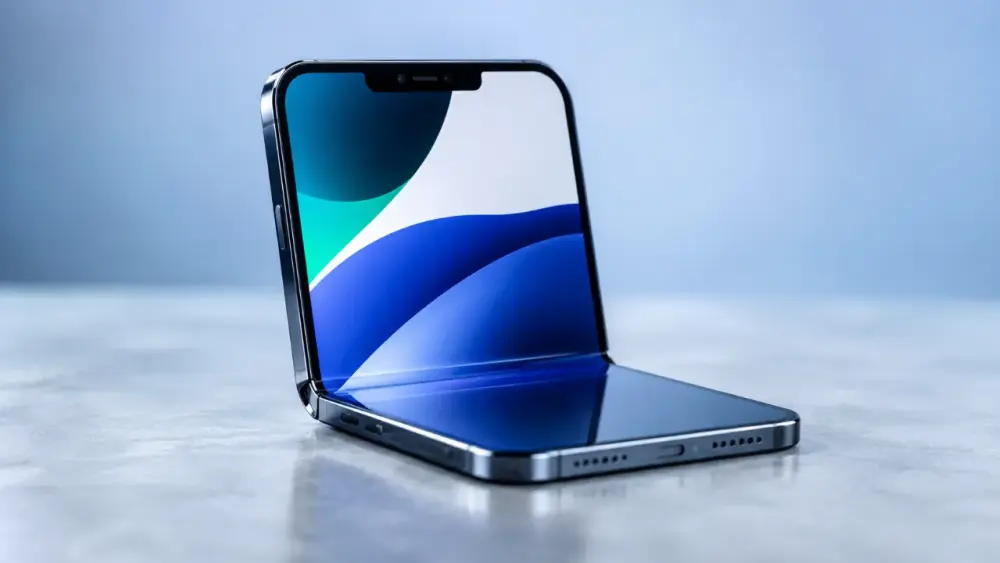
Apple Commits $25 Billion to Elevate the Foldable “iPhone Ultra”
Apple has initiated a massive shift in the global smartphone landscape by directing its Asian supply chain to substantially ramp up production for its highly anticipated first-generation foldable device. Expected to be dubbed the “iPhone Ultra,” the tech giant has elevated its manufacturing targets to a staggering 10 million units for 2026. This audacious move underscores AppleâÂÂs commitment to treating the foldable format as a core premium revenue stream rather than an experimental side project.
According to supply chain analyses confirmed by Nikkei Asia, this target represents a major upward adjustment from prior internal estimates of 7 to 8 million units. By committing to 10 million devices for its initial launch, Apple is leveraging its unparalleled purchasing power to secure vital hardware components, leaving rival manufacturers to navigate an industry-wide memory chip shortage.
Also Read: Apple M7 Ultra Mac Studio 2028: Redesign & Specs
The 220 Million Unit Juggernaut
The foldable iPhone is the centerpiece of what analysts predict will be AppleâÂÂs most ambitious hardware release cycle in a decade. Between late 2026 and early 2027, the company is poised to launch up to five distinct iPhone models.
Key Supply Chain Statistics
- Component Allocation: Apple has secured parts for roughly 80 million smartphones specifically targeted for the second half of 2026.
- Strategic Models: Production capacity is heavily concentrated among the upcoming iPhone 18 Pro, iPhone 18 Pro Max, and the debut foldable model.
- Global Targets: In total, Apple projects its global iPhone output for 2026 will comfortably surpass the 220 million unit threshold.
This aggressive inventory accumulation is a strategic masterstroke. With the explosive growth of Artificial Intelligence (AI) and enterprise data centers consuming global semiconductor resources, Chinese competitors like Xiaomi, Oppo, and Vivo have been forced to defensively scale back their annual production targets to under 100 million units each. Apple, backed by its multi-trillion-dollar market capitalization, has effectively bypassed the queue, even instructing suppliers to reallocate components originally meant for the iPhone 17 series to secure the iPhone 18 launch supply.
Late to the Party, Arriving in Force
Apple is not the first to enter the foldable smartphone category. Competitors like Samsung, Huawei, and Motorola have spent the last five years acting as public beta testers, navigating the complex and costly engineering hurdles of delicate hinge mechanisms and creased OLED screens. SamsungâÂÂs Galaxy Z Fold and Z Flip lines currently dominate the category, shifting the conversation from fundamental reliability to optimization.
Historically, Apple employs a strategy of calculated patience. From the digital music player to the smartwatch and tablet, the company has routinely allowed competitors to absorb the initial risks and design failures of early adoption before entering the market with a refined, highly polished hardware-software ecosystem. The immense scale of this 10 million-unit order suggests that Apple leadership is confident they have solved the durability and battery longevity issues that continue to impact existing foldables.
Also Read: Android App Development Types: A Developer’s Guide
Economic Implications for Global Markets
The arrival of a foldable “iPhone Ultra” carries massive economic implications for consumer electronics markets globally, particularly in emerging tech hubs like Kenya and Nigeria.
- Premium US Pricing: Industry analysts forecast the retail price of the new foldable will hover around $2,500 USD at launch.
- African Retail Forecasts: After accounting for import duties, Value Added Tax (VAT), and volatile foreign exchange rates, the device could easily retail in Nairobi or Lagos for well over KES 350,000 or NGN 3.8 million respectively.
This pricing anchors an entirely new, hyper-luxury tier in the African mobile market, significantly eclipsing the current upper limits of the highest-spec iPhone Pro Max models. Despite the premium cost, demand from corporate executives, political figures, and tech enthusiasts on the continent is expected to remain high. The rollout will likely stimulate the secondary trade-in market and accelerate specialized financing options offered by local telecom providers like Safaricom.
As Samsung shifts its marketing focus toward lifestyle design and away from raw hardware specifications, AppleâÂÂs entry is set to spark an aggressive battle for the high-end consumer. By ordering 10 million foldable units right out of the gate, Apple is signaling its clear intent to dominate the premium smartphone segment.